

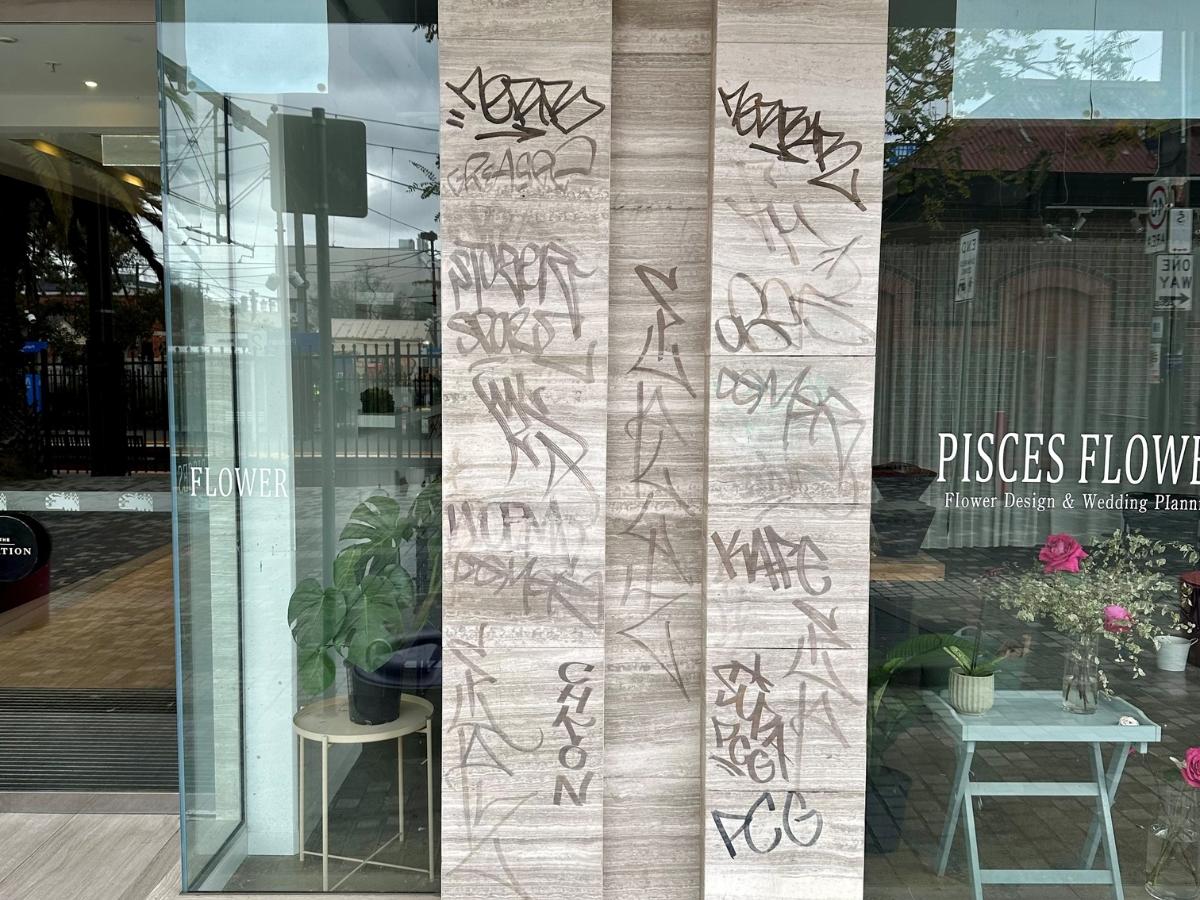
When specifying cladding for public or high-traffic projects, architects and builders are increasingly considering graffiti removal and long-term cleanability as key performance factors.
Why Cleanability Matters in Cladding
Graffiti is more than a cosmetic nuisance—it can significantly impact the appearance, perception, and maintenance costs of a building. Traditional cladding materials such as natural stone or aluminium panels can absorb staining, require strong chemical cleaners, or even sustain permanent surface damage when graffiti is removed. For councils, transport authorities, and developers managing long-term infrastructure projects, this translates to high ongoing costs.
Hytect tiles, on the other hand, have been specifically engineered for ease of cleaning. Their surface technology not only resists staining but also reduces the adhesion of graffiti, dirt, and pollutants. This means faster cleaning, lower chemical use, and less disruption to public spaces.
What is Hytect
Hytect is a proprietary surface treatment applied to ceramic façade panels that enhances durability, reduces maintenance requirements, and improves sustainability outcomes. For those new to Hytect, our introduction article outlines the technology and the benefits it provides for both private and public developments.
Hytect surface is a standard feature of KeraTwin Ceramic Facade ceramic panels which has been used in infrastructure projects in high traffic public locations around Australia, including Coburg Station, Moreland Stations, Pakenham Station, Narre Warren Station , and Deer Park Station.
Hytect has a lifetime warranty.
To find out more on the investigation of cleanability of Graffiti, with glazed Keratwin, click here
To find out more on the investigation of cleanability of Graffiti, with unglazed Keratwin, click here
In-House Testing and Independent Studies
At KLAY, we have conducted extensive in-house testing to validate the cleanability of Hytect tiles under real-life conditions. These tests included graffiti removal trials and exposure to an oily dirt formula often used in laboratories to simulate environmental soiling. Results consistently show that Hytect surfaces outperform many conventional cladding options.
Independent research supports these findings. A recent journal article compared graffiti removal from ceramic façade panels to other materials and highlighted the advantages of Hytect technology. Graffiti was removed with minimal effort and without damaging the tile surface, something that is often not the case with porous or softer cladding materials.
Comparing Hytect Ceramic Façade Panels to Other Cladding Solutions
When evaluating materials for cladding projects, natural stone, aluminium, and composite panels are often considered. Each has its strengths, but in terms of graffiti removal and long-term performance, Hytect ceramic tiles demonstrate a clear advantage:
-
Natural stone: Highly aesthetic, but porous and prone to permanent staining. Cleaning often requires aggressive chemicals or mechanical abrasion.
-
Aluminium panels: Lightweight and versatile, but surface coatings can be easily damaged during graffiti removal.
-
Hytect ceramic tiles: Non-porous, chemically resistant, and engineered for cleanability, offering reduced maintenance costs and extended lifecycle performance.
Practical Benefits for Public and Private Projects
For councils, architects, and developers, specifying cladding that is both durable and low-maintenance makes financial and environmental sense. Hytect technology not only enables efficient graffiti removal but also supports long-term sustainability goals by reducing the use of harsh cleaning chemicals and extending the lifespan of the façade system.
At KLAY, we believe that the choice of cladding should balance aesthetics, durability, and lifecycle cost. With proven performance in major infrastructure projects, Hytect ceramic façade panels are a compelling choice for those seeking a low-maintenance, graffiti-resistant cladding solution.
With multiple infrastructure projects across Australia now completed using Hytect ceramic façade tiles, there is no better proof of performance than than the real world examples in Victoria and New South Wales.
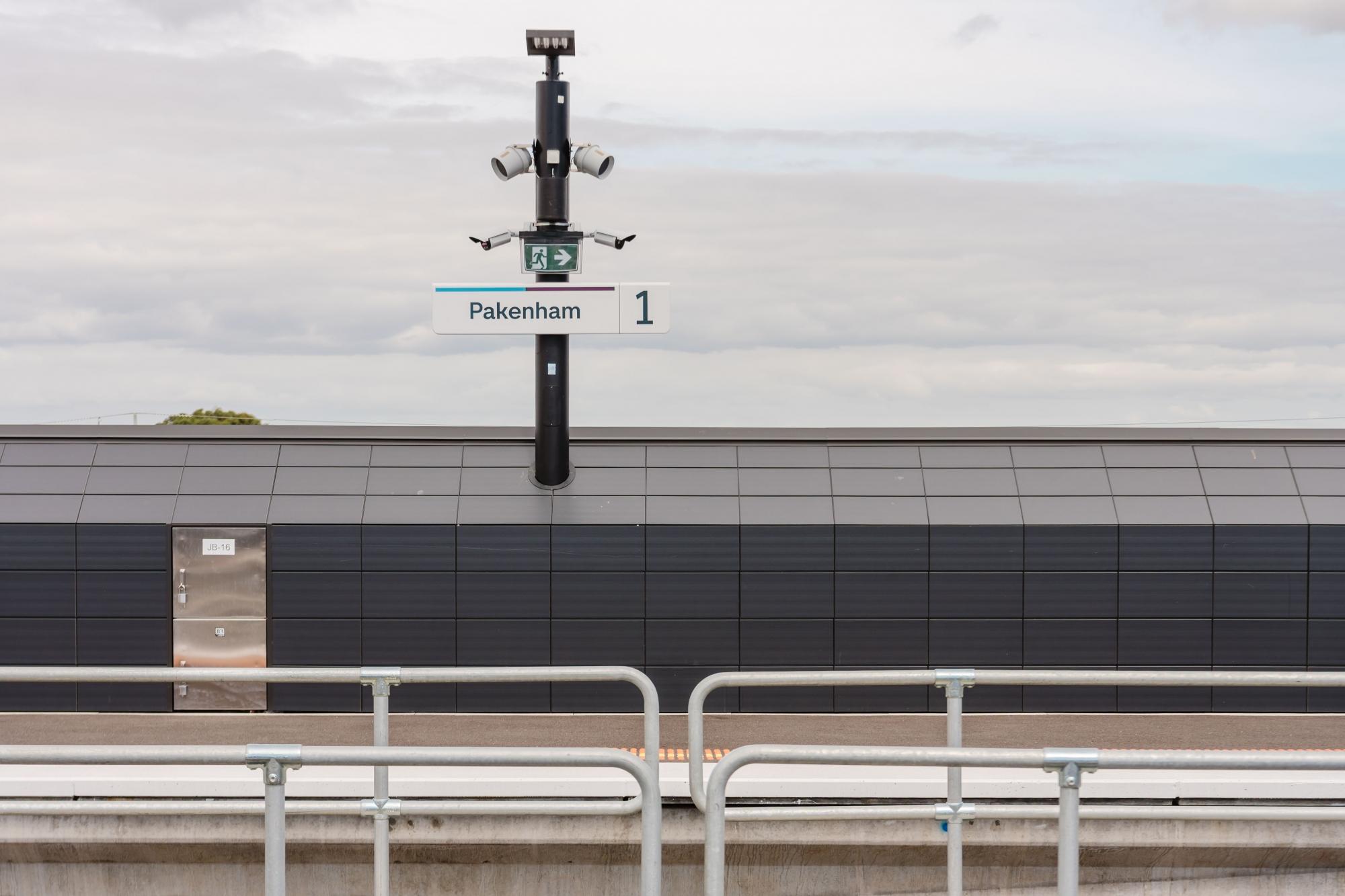
Pakenham Station with KeraTwin Hytect Facade – Graffiti free months after opening
Questions to Ask Cladding Suppliers
When specifying cladding, especially for public or high-traffic projects, it’s important for architects and project managers to go beyond surface-level performance claims. Asking the right questions up front can help avoid costly maintenance issues later. Here are some key questions to raise with any cladding supplier:
-
What is the cleaning and maintenance regime?
Understanding the recommended process, frequency, and chemicals required for cleaning is essential. A material that appears cost-effective initially may require expensive, specialised maintenance. -
Is following the maintenance regime a condition of the warranty?
Some warranties are only valid if strict cleaning regimes are followed. Suppliers should clearly explain whether failure to meet these requirements could void coverage. -
How does the surface perform under graffiti removal tests?
Ask for independent test data or in-house trial results showing how the cladding performs against spray paint, markers, or environmental pollutants. -
What chemicals or equipment are needed for graffiti removal?
Materials that require harsh solvents or abrasive methods can compromise the façade’s appearance and lifespan. -
What is the long-term lifecycle cost compared to alternative materials?
Request a comparison that includes not just upfront supply costs, but also expected cleaning, maintenance, and replacement over the building’s lifecycle.
By asking these questions early in the design and specification phase, architects can ensure they select a cladding solution that is both high-performing and cost-effective over time.
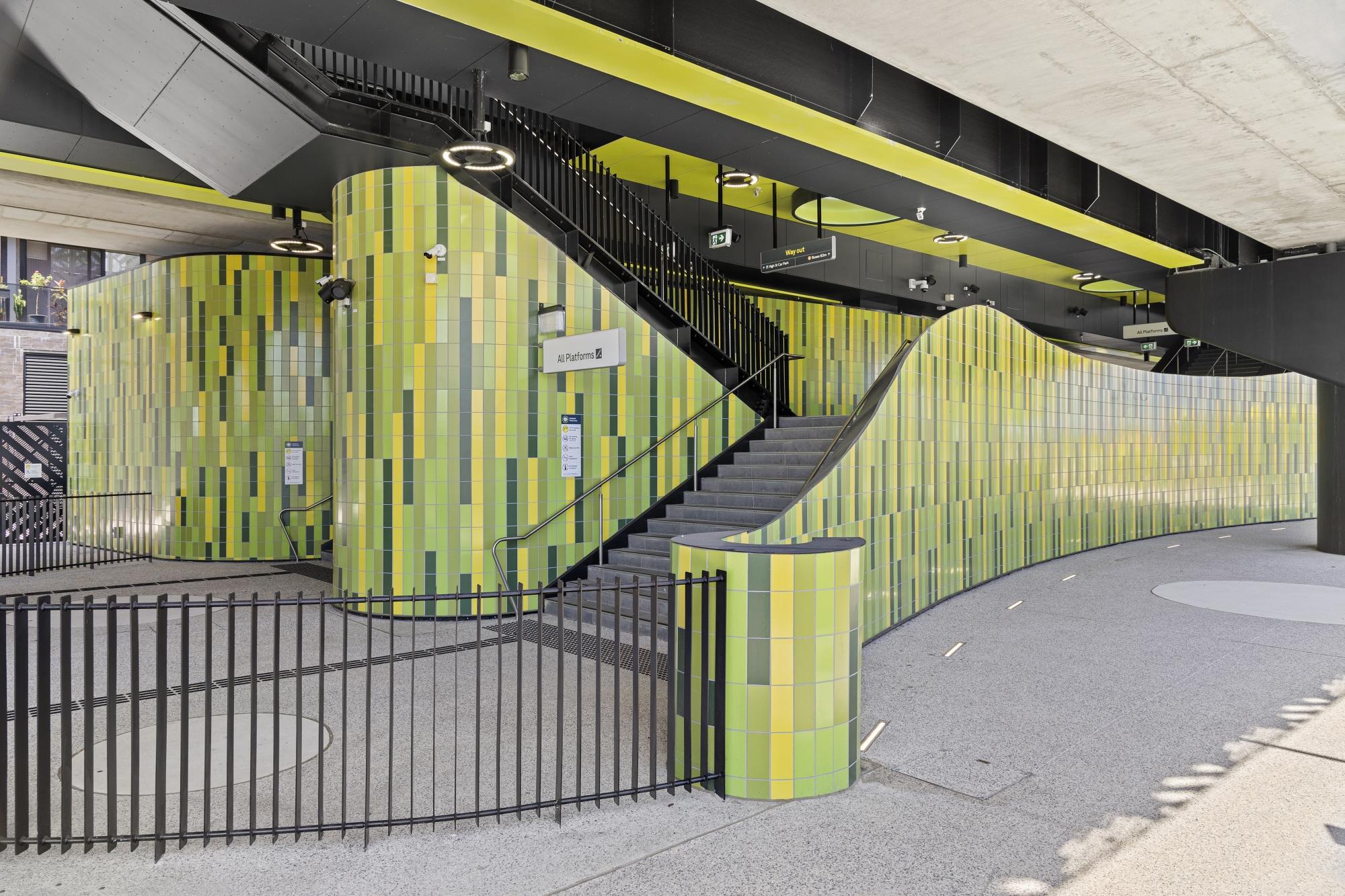
Keon Park Station with Chroma Hytect tiles – Graffiti free months after opening


