

Image: Northcote Aquatic and Recreation Centre, Darebin City Council, Designed by Warren & Mahoney
This article informs decision-makers of pool concourse operational issues, performance, risk management, and technical details when considering surfaces for swimming pools
Why Aquatic Surface Cleanability Matters
Aquatic floor surfaces, such as pool concourse and change-room areas, require regular cleaning to maintain their aesthetic appeal, hygiene, and safety. Cleanable surfaces reduce overall maintenance costs and improve the safety of the aquatic environment.
Swimming pool patrons unwittingly introduce bodily fats and oils to bacteria, fungi, viruses and other pathogens, which creates health issues and can significantly reduce the effectiveness of slip-resistant surfaces
Fact: Contaminated tile surfaces have been shown to reduce slip resistance by up to 30%, even when there are no noticeable signs of soiling on the tile [1].
Material Selections
There are several commonly used floor surfaces including exposed aggregate, rubber, applied MMA resin and ceramic tiles. Each surface can be ranked in terms of cost, performance, longevity, and durability. Ceramic tiles are one of the most popular flooring due to their durability, aesthetic, and availability of high slip-resistance options. This topic is discussed further in our article Specifiers Guide to Tile Selection Part II: Pool Surrounds.
Fact: Ceramic Tiles with a titanium dioixide surface (Hytect) which assists in breaking down surface dirt are easier to clean [2]
Accumulated Cleaning Costs
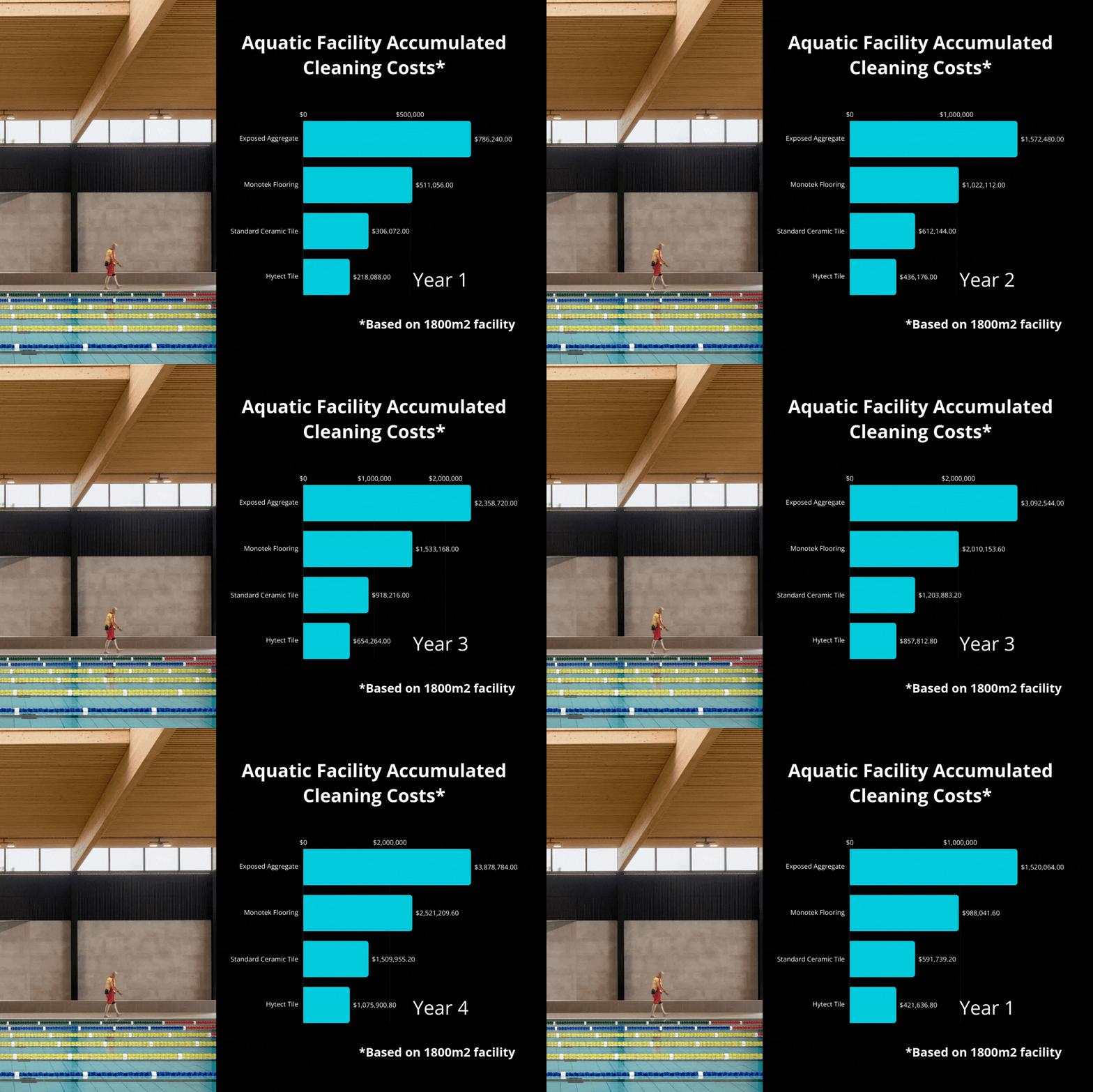
The problem is swimming pool centre areas with high patronage becomes difficult and costly to stay on top of the cleaning. Cleaning methodology is one factor, however the problem, or solution, can start with material selection in the design stages.
“We are normally called in by the operators when slips and falls start to happen. What we typically see is a centre over several months the floor is not cleaned properly. Depending on the condition of flooring. We will quote accordingly. Some surfaces are harder to clean and require more chemicals, and there is a cost associated with this” Aquatic Cleaning Solutions owner, Gary Polson.
Fact: It has been estimated that the difference in cost of cleaning per square meter of a standard ceramic tile compared to a Hytect tile, is as much as 40% more [3].
The Solution
Hytect ceramic tiles represent a comprehensive solution for pool surrounds, offering easier maintenance, and therefore reduced cleaning costs and higher slip resistance over time.
The Hytect effect keeps surfaces cleaner for longer periods without requiring extensive scrubbing or harsh chemicals.
Fact: Hytect ceramic surface requires less frequency of cleaning and up to 50% less chemical usage, which equates to less cost and reduced impact on both the community asset and the environment [4]
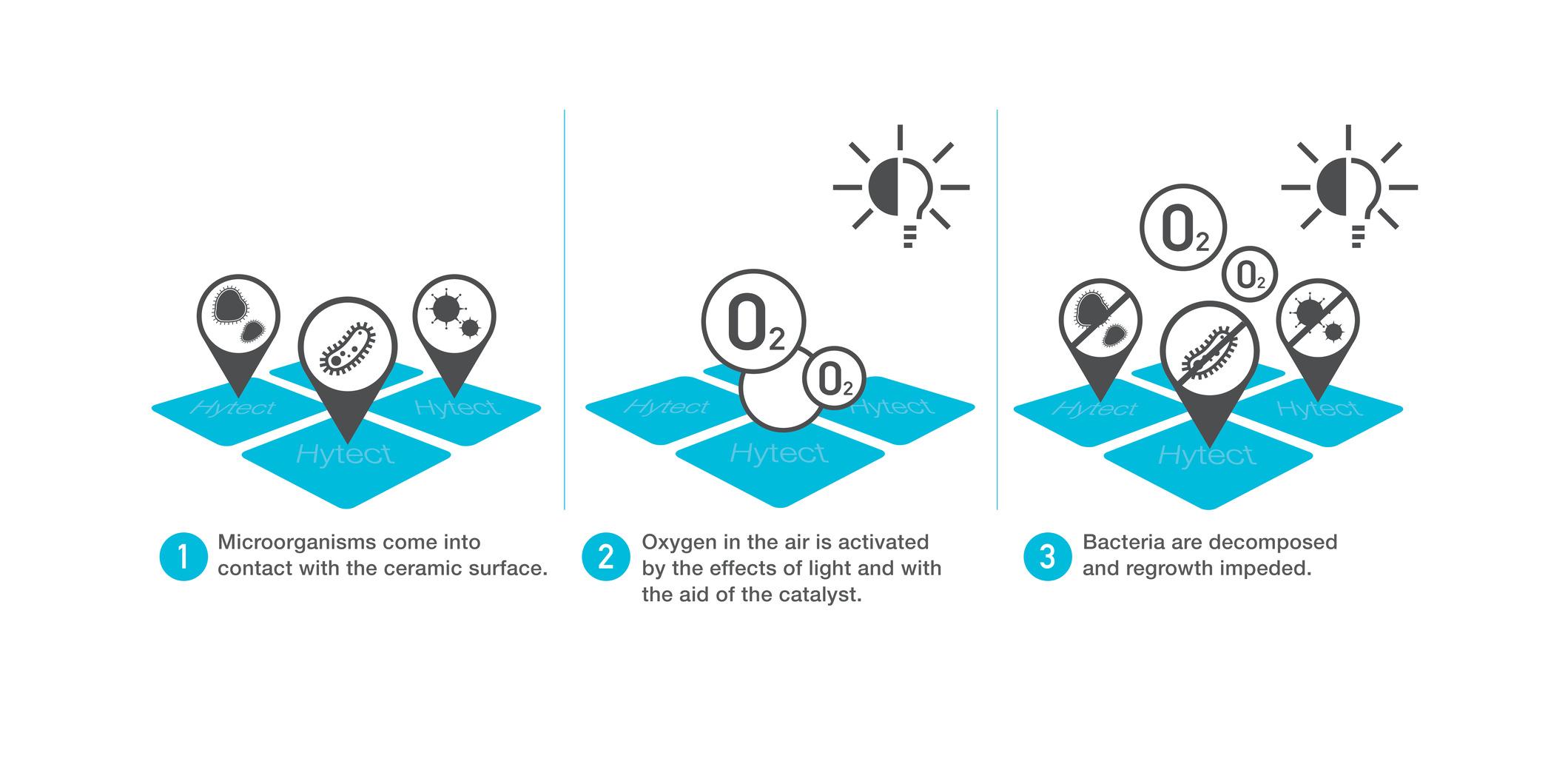
In combination with light and oxygen, the surface of Hytect ceramic releases active oxygen, preventing the growth of mould, viruses and bacteria directly on the surface.
Fact: Hytect tile surface has been shown to significantly enhance the degradation of bacteria including E. coli. and S. aureus, when compared to tiles without Hytect surface [5]
Sources
[1] Advanced Technology Testing & Research: Investigation into the effect of contamination of pool surrounds
[2] Aquatic Recreation Victoria Pool Concourse Guidelines 2011
[3] Accumulated Cleaning Costs by Aquatic Cleaning Solutions, 2021
[4] Agrob Buchtal Research Report
[5] Test Report: Photocatalytic degradation of bacterial on tiles with HT coating, 2013
I am raw html block.
Click edit button to change this html


